COMMODITY · OIL PALM · HS 1511–1513
Oil Palm under the EUDR.
Palm oil and its listed fractions and derivatives — with geolocation that starts at the plantation and passes through the mill’s supply shed.
FIG 01 — YOUR OBLIGATIONS
Three facts before anything else.
SCOPE
HS 1511–1513
Oil Palm products under the listed HS codes — plus listed derivatives. Representative table below; the current Annex I is the boundary.
GEOLOCATION
POINT ≤4 HA · POLYGON >4 HA
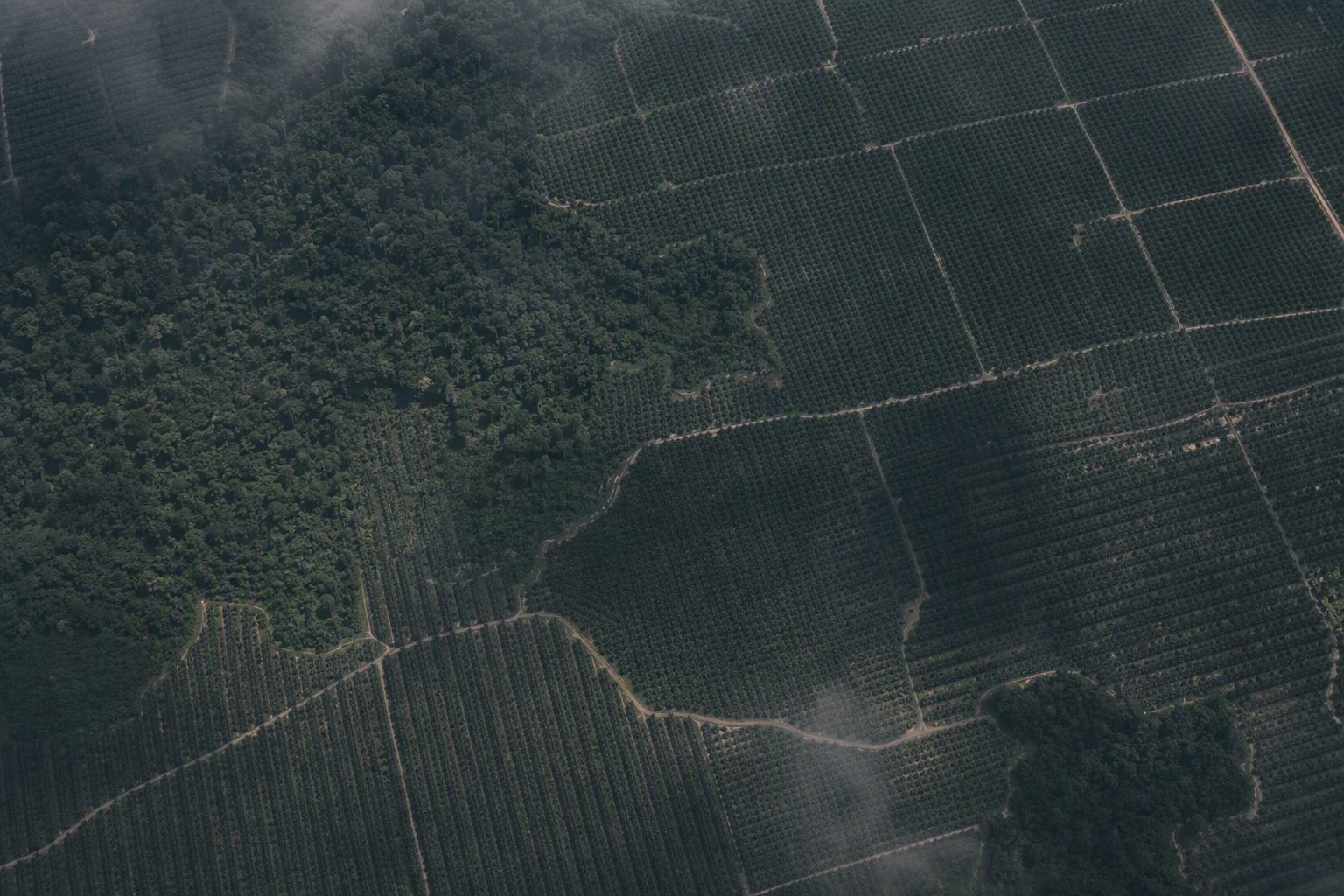
Plantation blocks are polygon-shaped and usually well mapped; the smallholder shed behind each mill is mostly points.
DEADLINE
30 DEC 2026 / 30 JUN 2027¹
Food and oleochemical importers: micro/small prepare for 30 Jun 2027, medium/large for 30 Dec 2026, per Regulation (EU) 2025/2650.
¹ Regulation (EU) 2025/2650.
FIG 02 — WHAT'S IN SCOPE
The Annex decides, not the label.
Palm oil’s Annex I chapter covers the oil and its listed relatives and fractions — palm-kernel, babassu and coconut (copra) oils — since Regulation (EU) 2023/1115 as amended.
The July 2026 amendments made no removals in this chapter as amended — but fractions and derivatives vary: check the current Annex I before classifying a product.
| HS CODE | PRODUCT NOTE |
|---|---|
| 1511 | Palm oil and its fractions, crude or refined |
| 1512 | Palm-kernel and babassu oil and fractions |
| 1513 | Coconut (copra) oil and fractions — listed under the palm-oil chapter |
REPRESENTATIVE CODES ONLY — ALWAYS CONFIRM AGAINST THE CURRENT ANNEX I OF REGULATION (EU) 2023/1115 AS AMENDED.
FIG 03 — GEOLOCATION RULES
One threshold, two formats.
≤ 0 ha
POINT ALLOWED
A single WGS84 coordinate at six decimal places locates plots of 4 ha or less.
> 0 ha
POLYGON REQUIRED
Plots above 4 ha need a closed vertex ring tracing the full boundary.
OIL PALMPlantation blocks are polygon-shaped and usually well mapped; the smallholder shed behind each mill is mostly points.
FIG 04 — SUPPLY-CHAIN REALITY
Oil palm industrializes the smallholder problem. Fresh fruit bunches spoil within 48 hours, so everything flows fast to a mill — and a mill’s supply shed aggregates fruit from hundreds of independent smallholdings plus its own plantations.
Geolocation therefore has two layers: plantation blocks (usually well-mapped, polygon-ready, above 4 ha) and smallholder plots feeding the same mill (mostly points ≤4 ha). A credible DDS needs the mill’s full shed, not just the estate.
Refining splits the chain into fractions and derivatives — palm oil, palm-kernel oil, oleochemicals. Only products under the listed HS codes are in scope; the boundary is the Annex, not the ingredient label.
Traders shipping crude palm oil usually hold the originating-mill lists; downstream buyers should obtain plot geolocation with those lists rather than mill addresses alone.
“By the time fruit reaches the mill, it’s already a mix of a hundred plots — geolocation has to be collected before the gate.”
KEY RISK — OIL PALM
Mill addresses are not plot geolocation. A DDS backed only by mill locations describes a supply shed, not the plots behind it — that’s where reviewers look first.
FIG 05 — SCREEN A OIL PALM PLOT
See it run on a real-shaped plot.
The scope-checker validates the geometry, screens it against open satellite datasets, and returns an indicative signal summary — one plot, free, no card.
Screen your oil palm plot — freeSAMPLE PLOT
INDONESIA · RIAU ESTATE BLOCK · POLYGON
0.5602,101.3431 · 0.5620,101.3455 …
DATASET: WHISP · HANSEN GFC v1.11 · GLAD ALERTS
Indicative screening for decision-support only — not a compliance determination, certification, or legal advice. Due-diligence obligations remain with the operator (EUDR Art. 10). · DEMO RESULT — configure the Whisp API in admin settings for live screening.
FIG 06 — QUESTIONS
Asked about oil palm.
OIL PALM · SCOPE-CHECKER
Screen your oil palm plots.
Free, one plot, indicative screening in about two minutes — prefilled for this commodity.
Run the scope-checker — freeIndicative screening for decision-support only — not a compliance determination.