COMMODITY · CATTLE · HS 0102 · 0201 · 0202 · 0206 · 1602 50
Cattle under the EUDR.
Live cattle and beef need geolocation for every establishment in the chain — birth farm included. Leather left Annex I under Commission Delegated Regulation (EU) 2026/2102 (in force 18 Sep 2026; as amended).
FIG 01 — YOUR OBLIGATIONS
Three facts before anything else.
SCOPE
HS 0102 · 0201 · 0202 · 0206 · 1602 50
Cattle products under the listed HS codes — plus listed derivatives. The table below carries every Annex I entry as amended, plus removed and often-assumed codes; the current Annex I is the boundary.
GEOLOCATION
POINT ≤4 HA · POLYGON >4 HA
Each establishment where the animals were kept — the birth farm and every farm after it — is located by a single point, whatever its size. Polygons are not required for cattle (Art. 2(28)).
DEADLINE
30 DEC 2026 / 30 JUN 2027¹
Importers in beef chains are often SMEs: medium and large operators apply from 30 Dec 2026; micro and small operators established by 31 Dec 2024 from 30 Jun 2027, per Regulation (EU) 2025/2650.
¹ Regulation (EU) 2025/2650.
FIG 02 — WHAT'S IN SCOPE
The Annex decides, not the label.
Cattle is in scope under Regulation (EU) 2023/1115 as amended: live cattle, their meat and edible offal, and prepared or preserved cattle meat. Only cattle of the genus Bos are covered — buffalo (Syncerus) and bison are not (Annex I note (1), as amended).
Commission Delegated Regulation (EU) 2026/2102 (in force 18 Sep 2026) deleted raw hides, skins and leather of cattle (HS 4101, 4104 and 4107) from Annex I, and adds frozen cattle tongues (0206 21 00) from 30 Dec 2027 (as amended). Live animals and meat remain.
| HS CODE | PRODUCT NOTE |
|---|---|
| 0102 | Live cattle — genus Bos only; not buffalo or bison |
| 0201 / 0202 | Meat of cattle, fresh or chilled; frozen |
| 0206 10 | Edible offal of cattle, fresh or chilled |
| 0206 22 / 0206 29 | Frozen cattle livers and other frozen cattle offal (tongues excluded) |
| 1602 50 | Prepared or preserved meat, meat offal and blood of cattle |
| 0206 21 00 | Frozen cattle tongues — added by Commission Delegated Regulation (EU) 2026/2102, applies from 30 Dec 2027 |
| 4101 / 4104 / 4107 | Raw hides and skins, tanned or crust hides, and leather of cattle — deleted by Commission Delegated Regulation (EU) 2026/2102 |
EVERY ANNEX I ENTRY AS AMENDED — PLUS REMOVED AND OFTEN-ASSUMED CODES. ALWAYS CONFIRM YOUR EXACT CODE AGAINST THE CURRENT ANNEX I OF REGULATION (EU) 2023/1115 AS AMENDED.
FIG 03 — GEOLOCATION RULES
One threshold, two formats.
≤ 4 ha
POINT ALLOWED
A single WGS84 coordinate at six decimal places locates plots of 4 ha or less.
> 4 ha
POLYGON REQUIRED
Plots above 4 ha need a closed vertex ring tracing the full boundary.
CATTLEEach establishment where the animals were kept — the birth farm and every farm after it — is located by a single point, whatever its size. Polygons are not required for cattle (Art. 2(28)).
FIG 04 — SUPPLY-CHAIN REALITY
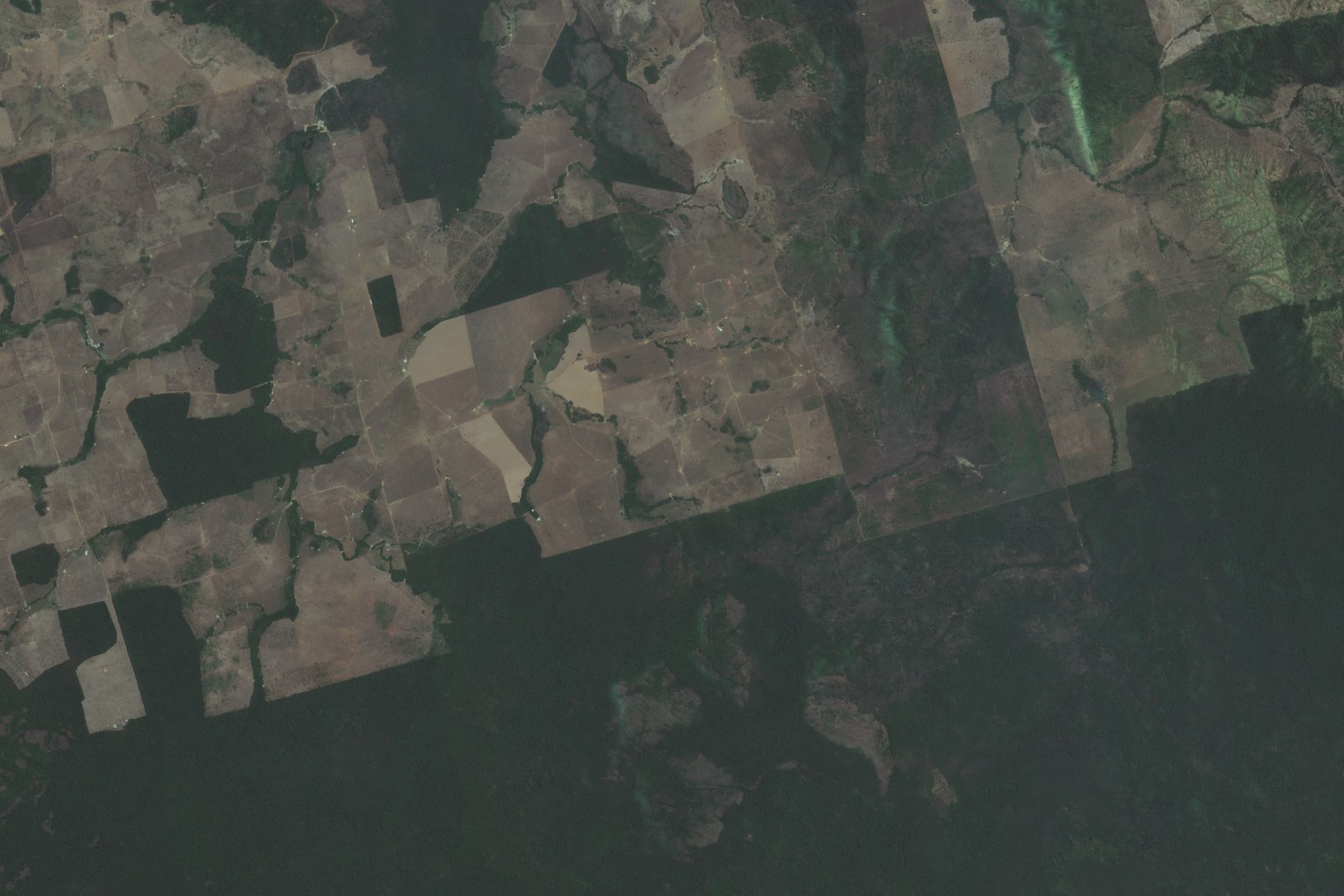
Cattle is the only EUDR commodity where the animal itself moves. A single animal can be born on one farm, raised on a second, finished on a third and slaughtered at a fourth — and the regulation wants geolocation for every establishment in that chain, not just the last one.
In practice, coordinates attach to animals or batches as they move. In South America, farm-level records often exist in national movement systems — but translating a movement document into DDS-ready geolocation for every establishment is slow, manual work.
Beef adds another layer: a slaughterhouse processes hundreds of animals a day, and the DDS references the establishments behind the batch, not the abattoir. Aggregating birth-farm and finishing-farm coordinates per lot is where most cattle-chain operators spend their preparation time.
Since Commission Delegated Regulation (EU) 2026/2102 deleted hides, skins and leather from Annex I (as amended), tanneries sit outside the commodity’s product scope — the Commission revisits leather in its 2030 general review.
“The hard part isn’t the pasture — it’s the paper trail from the birth farm to the abattoir.”
KEY RISK — CATTLE
The most common failure point in cattle chains is a gap between birth-farm records and slaughter batches. Start collecting a geolocation point per establishment now — retro-fitting a year of movements later is far harder.
FIG 05 — SCREEN A CATTLE PLOT
See it run on a real-shaped plot.
The scope-checker validates the geometry and runs a demonstration screening — one plot, free, no card.
Screen your cattle plot — freeSAMPLE PLOT
BRAZIL · MATO GROSSO PASTURE · POINT
-15.6014, -56.0979
ILLUSTRATIVE — DEMONSTRATION ENGINE OUTPUT, NOT SATELLITE DATA
Indicative screening for decision-support only — not a compliance determination, certification, or legal advice. Due-diligence obligations remain with the operator (EUDR Art. 10). · DEMO RESULT — generated by the demo engine, not measured from satellite data. Not for regulatory use.
FIG 06 — QUESTIONS
Asked about cattle.
Do I need geolocation for the birth farm?
Yes. For cattle, geolocation covers every establishment where the animals were kept — the birth farm and each farm after it. Each establishment takes a single point (latitude and longitude with at least six decimal digits), whatever its size; the 4-hectare polygon rule does not apply to cattle (Art. 2(28)).
Is leather in scope?
No longer. Commission Delegated Regulation (EU) 2026/2102 (in force 18 Sep 2026) deleted raw hides and skins, tanned or crust hides and leather of cattle (ex 4101, ex 4104 and ex 4107) from Annex I, as amended.
Are dairy products covered?
No — milk and dairy products are not on the Annex I list. The cattle chapter covers live cattle, their meat and edible offal, and prepared or preserved cattle meat.
Who files the DDS in a cattle chain?
The operator — whoever first places the product on the EU market or exports it, typically the beef importer. Since Regulation (EU) 2025/2650, downstream operators and traders file no DDS: they keep supplier and customer details for five years, and the first one after the operator also keeps the DDS reference numbers.
CATTLE · SCOPE-CHECKER
Screen your cattle plots.
Free, one plot, a demo-engine screening in about two minutes — prefilled for this commodity.
Run the scope-checker — freeIndicative screening for decision-support only — not a compliance determination.